Useful articles
Ectopic Pregnancy: Early Signs, hCG and Ultrasound
The test showed two lines, but a few days later pain appeared on one side of the abdomen along with light bleeding. That combination of three findings is one of the situations in gynecology where waiting is not an option. An ectopic pregnancy does not resolve by itself, and time is the decisive factor.
What it means
Normally a fertilised egg reaches the cavity of the uterus and develops there. In an ectopic pregnancy it stops on the way — most often in the fallopian tube, less commonly in an ovary or the abdominal cavity.
The problem is that the fallopian tube is not built to stretch. If the pregnancy keeps growing, the tube can rupture and cause internal bleeding. This is why the condition needs to be found early — when it is, treatment is far gentler.
Risk factors
- Previous pelvic inflammatory disease;
- Blocked fallopian tubes or previous tubal surgery;
- A previous ectopic pregnancy;
- Endometriosis;
- Smoking;
- Pregnancy after IVF or with an intrauterine device in place.
At the same time, a large share of ectopic pregnancies occur in women with no risk factors at all. So "I have no risk factors" is not a reason to ignore symptoms.
Early signs
Three findings most often occur together:
- A positive pregnancy test or a missed period;
- Pain low in the abdomen on one side — mild and dragging at first, then increasing;
- Light vaginal bleeding — different from a normal period: lighter, longer, sometimes dark in colour.
Other symptoms may join in: dizziness, nausea, general weakness.
When to call emergency services immediately
The following signs may indicate a ruptured tube and leave no time to wait:
- Sudden severe abdominal pain;
- Pain radiating to the shoulder or shoulder blade;
- Pallor, cold sweat, a racing heartbeat;
- Fainting or blacking out;
- Continuing bleeding together with weakness.
Diagnosis: hCG and ultrasound together
The diagnosis rests on combining two investigations.
hCG trends. In a normally developing early pregnancy the level of human chorionic gonadotropin in the blood rises substantially roughly every two days. In an ectopic pregnancy it more often rises slowly, plateaus or changes erratically. This is exactly why the test is taken repeatedly rather than once — a single value proves nothing on its own.
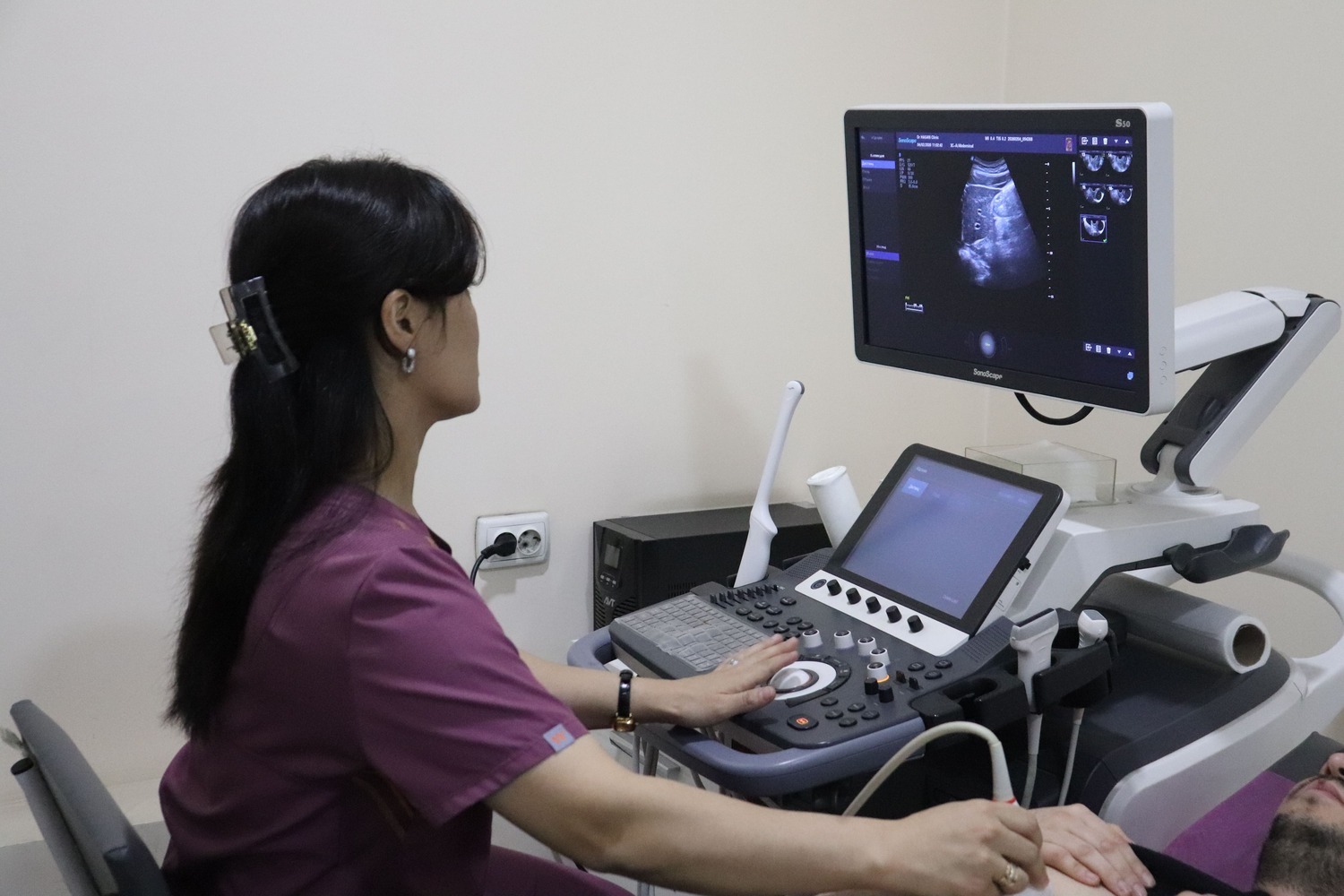
Pelvic ultrasound. A transvaginal scan answers the central question: is the gestational sac inside the uterus or not. Once hCG reaches a certain level, an intrauterine pregnancy should be visible on ultrasound. If it is not visible while hCG is high, that raises serious suspicion of an ectopic pregnancy.
Sometimes a single visit does not give a definitive answer. The doctor then arranges a repeat test and scan after 48 hours. This is not carelessness — it is the correct and safe approach.
Treatment options
The method depends on how far along the pregnancy is, the hCG level, the ultrasound findings and the woman's overall condition. When it is found early and the patient is stable, medical treatment may be possible, which allows the tube to be preserved. In other cases surgery is performed; in modern practice this is usually laparoscopic, through small incisions. If rupture has already occurred, surgery becomes an emergency.
The choice of method is made by the doctor alone, based on the results of the assessment.
Future pregnancies
Most women who have had an ectopic pregnancy go on to carry a healthy pregnancy later. There is just one condition: in the next pregnancy, see a gynecologist at the earliest stage and confirm the location of the pregnancy by ultrasound. A simple step, but a very important one.
At Doctor Hasan Medical Center
Our centre has the gynecology consultation, the laboratory and ultrasound diagnostics in one place, so the hCG result and the scan findings can be assessed together and a clear answer reached sooner. If one-sided lower abdominal pain or bleeding appears during pregnancy, do not wait for it to pass — this needs to be checked.
What to tell the doctor at the appointment
In this situation how quickly a diagnosis is reached often depends on the information you provide. Before the visit, be clear about:
- The first day of your last period — the key data for dating the pregnancy;
- When the test turned positive — and, if you took several, whether the line grew stronger or fainter;
- When the pain started, on which side, and whether it is increasing;
- The date the bleeding began and how heavy it is;
- Details of previous pregnancies, operations, an intrauterine device or IVF;
- Any medicines you are taking.
If abdominal pain suddenly worsens, or you become dizzy and weak, do not wait for the appointment — call emergency services straight away.
Important: this article is for information only and does not replace a medical consultation. See a specialist for an accurate diagnosis and treatment plan.
Our doctors in this field