Useful articles
Frontal and Ethmoid Sinusitis: Forehead and Eye-Area Sinus Pain
Frontal and ethmoid sinusitis is inflammation of the frontal sinuses in the forehead and of the ethmoid air cells between the eyes. Both usually begin after a cold: the nose blocks, thick discharge appears, and pressure and pain in the forehead or at the bridge of the nose get worse when you bend forward. Most cases are viral and settle within one or two weeks. However, these sinuses lie very close to the eye socket and the brain, so serious complications occasionally occur. This article explains the causes, how these forms differ from maxillary sinusitis, which signs need urgent help, and how the condition is diagnosed and treated.
- What frontal and ethmoid sinusitis are
- Causes: viruses, bacteria and risk factors
- Symptoms of frontal and ethmoid sinusitis
- Maxillary, frontal and ethmoid sinusitis: what is the difference
- When to see a doctor urgently
- Diagnosis: examination, endoscopy and CT
- How frontal and ethmoid sinusitis are treated
- Chronic sinusitis and prevention
- Frequently asked questions
- At Doctor Hasan Medical Center
What frontal and ethmoid sinusitis are
The bones around the nose contain air-filled spaces, the paranasal sinuses. The frontal sinuses lie above the eyebrows, and the ethmoid air cells sit at the bridge of the nose, between the eyes. Each drains into the nose through a narrow channel. When the lining swells, the channels narrow, mucus cannot drain and inflammation sets in. Frontal sinusitis and ethmoiditis often occur together and alongside maxillary sinusitis in the cheekbones. In young children the frontal sinuses have not yet developed, so ethmoiditis is more typical at that age.
Causes: viruses, bacteria and risk factors
Acute sinusitis is most often caused by a cold virus. Under the European EPOS 2020 guidance, symptoms lasting under 10 days are usually viral. A bacterial infection is suspected when:
- symptoms continue for more than 10 days without improving;
- there is “double sickening”: you start to recover and then get worse again;
- a high temperature comes with pus-like discharge and severe pain on one side.
Sinusitis is more likely with allergic rhinitis, nasal polyps, a deviated septum, smoking and reduced immunity, all of which narrow the drainage channels and encourage repeated flare-ups.
Symptoms of frontal and ethmoid sinusitis
Both forms share the general signs of sinusitis:
- a blocked nose;
- thick yellow or green discharge, or mucus running down the throat;
- a reduced sense of smell;
- facial pressure and pain, worse when bending forward;
- a temperature, tiredness and a night-time cough.
In frontal sinusitis the forehead hurts above the eyebrows, often more in the morning and when pressed or tapped. In ethmoiditis pressure and pain are felt at the bridge of the nose and the inner corner of the eye, sometimes spreading behind the eye. Mucus dripping into the throat is covered in our article on postnasal drip.
Maxillary, frontal and ethmoid sinusitis: what is the difference
| Feature | Maxillary | Frontal | Ethmoid |
|---|---|---|---|
| Where it hurts | Cheek, upper teeth | Forehead, above the eyebrows | Between the eyes, bridge of the nose |
| Who gets it most | The most common type of sinusitis | Teenagers and adults | Any age, especially young children |
| What makes the pain worse | Bending, chewing | Bending, pressing the forehead | Bending, pressing the bridge of the nose |
| Possible complications | Usually stays local | Spread to the frontal bone and brain | Spread to the eye socket |
Several sinuses are often inflamed together, so an ENT doctor confirms the diagnosis.
When to see a doctor urgently
Complications are rare but develop quickly. Call an ambulance (103) or see a doctor the same day if you notice:
- swelling and redness of the eyelids, especially in a child;
- pain in the eye, a bulging eye or difficulty moving the eye;
- double vision or reduced vision;
- a soft, tender swelling on the forehead (known as Pott’s puffy tumour);
- a severe, worsening headache with a high temperature;
- a stiff neck, confusion, drowsiness, vomiting or seizures.
These signs may mean spread to the eye socket, frontal bone or lining of the brain, which needs hospital treatment.
Diagnosis: examination, endoscopy and CT
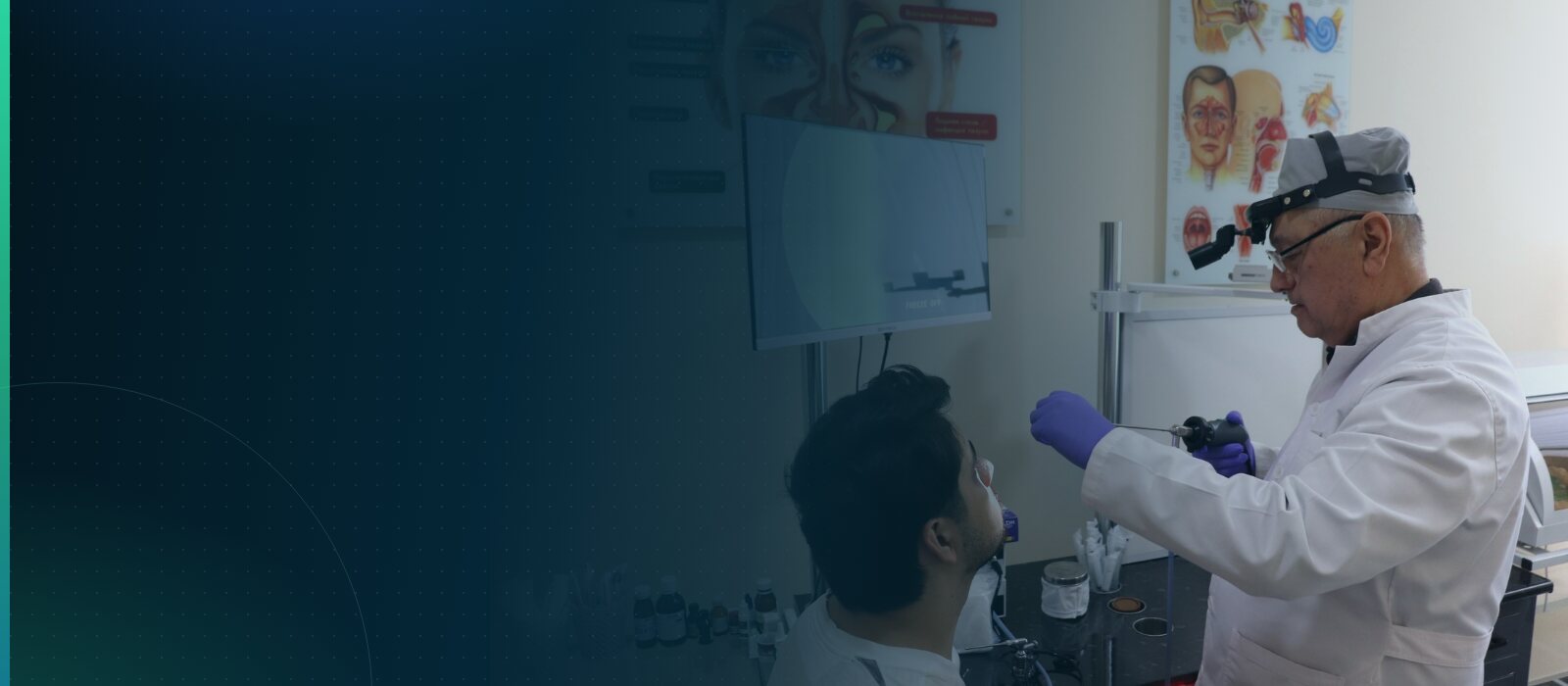
Acute sinusitis is mainly diagnosed clinically: the doctor asks about your symptoms, feels the face and looks inside the nose. Nasal endoscopy can show swelling and pus around the sinus openings, polyps or a deviated septum. A plain X-ray is no longer the main test. A CT scan is needed if a complication is suspected, if sinusitis is chronic or keeps returning, and before surgery. Complications may also require blood tests, an eye specialist’s assessment and sometimes an MRI scan.
How frontal and ethmoid sinusitis are treated
Viral sinusitis usually clears on its own; treatment eases the symptoms:
- saline nasal rinses thin the mucus and help it drain;
- a steroid nasal spray, prescribed by a doctor, reduces swelling;
- ordinary painkillers and fever-reducing medicines;
- decongestant drops no longer than 3–5 days, to avoid rebound congestion;
- plenty of fluids and rest.
Antibiotics are needed only for signs of a bacterial infection or a complication, and only a doctor prescribes them. They do not work against viruses, and unnecessary courses cause side effects and resistance. Complications are treated in hospital with intravenous antibiotics and sometimes urgent surgery. Home heating and folk remedies cannot replace treatment and may delay seeing a doctor.
Chronic sinusitis and prevention
Sinusitis lasting longer than 12 weeks is called chronic. The doctor then looks for a cause such as allergy, polyps, a deviated nasal septum or narrow drainage pathways. Treatment starts with long-term saline rinses and steroid sprays. If medicines fail, functional endoscopic sinus surgery (FESS), which widens the natural sinus openings, may be discussed on the basis of a CT scan.
To lower your risk:
- rinse your nose with saline during a cold;
- keep allergic rhinitis under control;
- avoid smoking and smoky rooms;
- do not use decongestant drops for long;
- blow your nose gently, one nostril at a time.
Frequently asked questions
How is frontal sinusitis different from maxillary sinusitis?
Both are forms of sinusitis; the difference is which sinus is inflamed. In maxillary sinusitis the sinus in the cheekbone is affected, and pain is felt in the cheek and upper teeth. In frontal sinusitis the forehead sinus is inflamed, so the pain is above the eyebrows and gets worse when bending forward. Several sinuses are often involved together, so an ENT doctor makes the exact diagnosis after an examination and plans treatment.
Do I always need antibiotics for frontal sinusitis?
Not always. Most sinusitis is linked to a cold virus and clears up without antibiotics, with saline rinses and local treatments. An antibiotic is needed when symptoms last more than 10 days, when there is a second worsening, when a high temperature comes with pus-like discharge, or when a complication is suspected. Only a doctor should choose the medicine and the length of the course; taking antibiotics on your own is not advised.
My child’s eyelid is swollen — could this be ethmoiditis?
Yes. In children, swelling and redness of an eyelid after a cold can mean that infection from the ethmoid cells has spread to the eye socket. It is especially worrying if there is a temperature, eye pain, a bulging eye or a change in vision, as this is an emergency. The child should be seen by a doctor the same day, or you should call an ambulance, because early treatment prevents complications.
Is it safe to warm my forehead when I have frontal sinusitis?
A warm compress on the forehead may give brief comfort, but it does not treat the inflamed sinus and cannot replace proper treatment. If you have a high temperature, severe pain or swelling on the forehead, see a doctor instead of applying heat. At home, saline rinses, plenty of fluids and rest are helpful. Do not use decongestant drops for long, and do not start antibiotics without a doctor’s prescription.
At Doctor Hasan Medical Center
The centre offers an ENT specialist consultation: the doctor asks about your symptoms, examines the nose and throat, and assesses which sinuses are inflamed and how severe the process is. If needed, further tests such as a CT scan are arranged, and the results are explained in plain language. The examination, diagnosis and treatment plan can be discussed in a single visit. The doctor draws up an individual plan and arranges follow-up visits for chronic or recurrent sinusitis. If surgery or hospital care is needed, the ENT doctor explains the options and next steps. More details are on the ENT department page. Please bring earlier test results and a list of your medicines.
Important: this article is for information only and does not replace a medical consultation. See a specialist for an accurate diagnosis and treatment plan.
Our doctors in this field