All services
Upper limb arterial Doppler in Tashkent
Blood flow is assessed along the arm arteries — subclavian, axillary, brachial, radial and ulnar. The scan is done for cold or numb hands, fingers turning white and a difference in blood pressure between the arms.
- Colour flow mapping
- No preparation
- No radiation
- Duration20–40 minutes
- PreparationNone required
- PainNone
- ResultsImmediately after the scan
When the arm arteries are examined
Poor circulation in the arms shows as fingers turning white then blue in the cold (Raynaud’s phenomenon), an arm that tires quickly, numbness and pain. Doppler determines whether these symptoms are due to narrowing, blockage or spasm of the vessels.
The scan is also used after arm vessel injuries or catheterisation, before creating a fistula for haemodialysis, and when a cervical rib or muscles compress the vessel (thoracic outlet syndrome). The doctor may ask you to hold your arm in different positions to reveal compression.
- fingers turning white and blue in the cold
- arm fatigue, numbness and pain
- blood pressure difference between arms
- injury to arm vessels
- assessing vessels before a dialysis fistula
How Doppler works
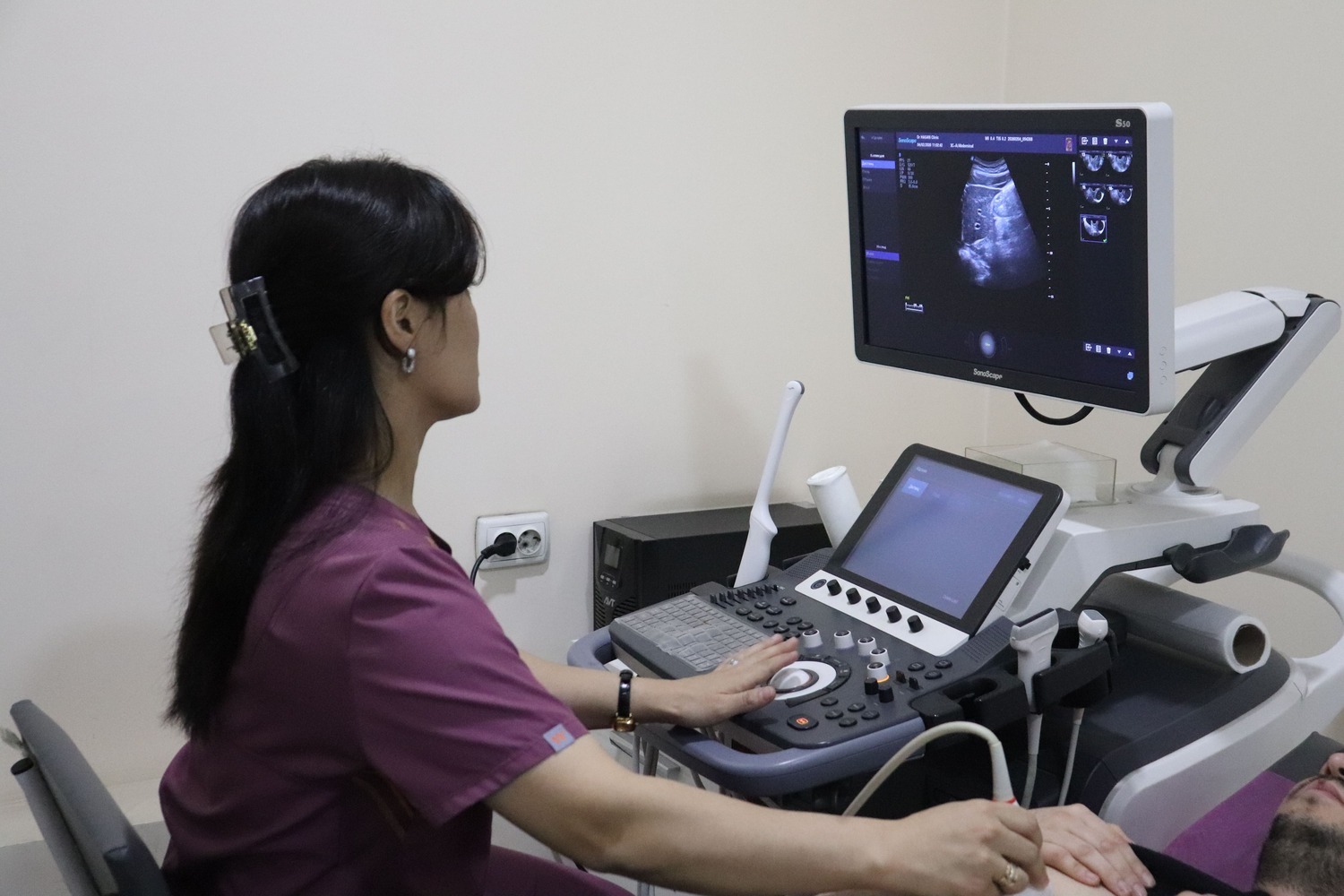
When ultrasound bounces off moving blood cells its frequency changes (the Doppler effect). The machine converts this change into the direction and speed of blood flow. The vessel wall and any changes inside are seen in standard mode, and flow in colour and spectral modes — which is why the test is also called duplex (triplex) scanning.
The scan detects narrowing, plaques, clots, faulty vein valves and widened vessels. It needs no contrast and no radiation, so it can be repeated as often as necessary during follow-up.
Preparing for the scan
No special preparation is required, but the result is more accurate if you:
- avoid smoking and strong coffee for 2 hours beforehand — both affect vessel tone
- tell the doctor about any medicines that affect blood vessels
- remove jewellery if the neck vessels are being scanned
- bring previous Doppler reports
Advantages of ultrasound
Ultrasound shows internal organs in real time and, unlike X-rays or CT, involves no ionising radiation. It can therefore be repeated as often as needed — including in pregnant women, babies and patients who require regular monitoring.
The scan is painless and needs no needles or injections. The probe glides over the skin with gel while the doctor assesses the size and structure of the organs and their blood flow on the screen. The report is issued immediately after the scan.
Ultrasound at Doctor Hasan Medical Center
Scans are performed by doctors trained in ultrasound diagnostics. The ultrasound room, laboratory and specialist doctors are in the same building, so you can show your result to a urologist, gynaecologist, endocrinologist or physician the same day and get a treatment plan straight away.
- the report and measurements are given right after the scan
- blood or urine tests can be done on site if needed
- booking in advance reduces waiting time
📖 Related article: Vascular Doppler Ultrasound: Who Needs It and When
Frequently asked questions
Is a Doppler scan painful?
Is ultrasound harmful?
When will the result be ready?
Doctors who provide this service



Choose a convenient time or call us — our administrator will answer all your questions.
Other services in this area
- Extracranial neck vessel Doppler
- Brachiocephalic artery Doppler (BCA)
- Lower limb arterial Doppler
- Limb vein Doppler (venous duplex)
- All clinic services →
Important: the information on this page is for general guidance and does not replace an examination by a doctor. A specialist decides whether a test or treatment is needed.
📞 +998 95 146 00 72 · +998 95 146 00 72
✉️
🌐 Instagram · Telegram · Facebook · YouTube · TikTok